An excellent EV charging setup disappears into your regimen. You park, plug in, and get up with range to spare. Getting to that result in Orange County takes more than buying a charger from a huge box shop. It indicates understanding your home's electrical capability, local code, the nuances of Tesla versus 3rd party devices, and the fine print around allowing and HOA rules. The ideal installer handles all of that quietly in the background, then shows you how to use the system without fuss.
I have invested years in Southern California garages and parking structures, from 1950s system homes in Garden Grove to brand-new townhomes in Irvine. The technical work is straightforward once you see the website, the service size, and the driving patterns. The obstacle is judgement, understanding when a 60 amp circuit makes good sense and when a shared 40 will do, when to run EMT on the surface area and when to fish NM in a finished wall, when to recommend a panel upgrade and when to lean on load management. That judgement is what separates a fast set up that lasts from a fast set up that trips breakers and frustrates a family.
What Level 1, Level 2, and DC Fast Actually Mean For a Home
Terminology gets tossed around. Here is the useful breakdown that matters for Orange County property owners:
- Level 1 runs off a standard 120 volt receptacle, typically at 12 amps. Think about 3 to 5 miles of range per hour. It works for low mileage drivers and over night leading ups. No new circuits, however it can add 12 to 15 hours to fill a big battery pack. Level 2 utilizes 240 volts at 16 to 80 amps, with typical residential circuits at 20, 30, 40, 50, or 60 amps. Charging rates range from about 7 to 40 miles per hour depending on the vehicle. This is the sweet area for most single family homes in Orange County. DC fast charging is the high powered equipment you see along highways. It bypasses the onboard battery charger and feeds the battery directly. Not a domestic alternative due to power, cost, and energy requirements.
On brand names, a Tesla Wall Adapter is a Level 2 EVSE. So are units from ChargePoint, Wallbox, Enel X, Emporia, ClipperCreek, and others. The cars and truck actually decides how many amps it will draw up to the EVSE's limitation and the circuit rating. A Tesla Wall Adapter on a 60 amp circuit can provide approximately 48 amps. If your panel allows just a 40 amp circuit, anticipate 32 amps readily available to the car.
The Site Stroll That Anticipates a Smooth Install
When a property owner in Objective Viejo calls about a Tesla charger, I ask a brief set of questions, then schedule a website check out. That walk tells me 90 percent of what I need: panel location and service size, course for cable, whether the garage is completed, and where the automobile's charge port sits when parked.
The load calculation happens next. In California, we use the state's embraced electrical code, which aligns with the National Electrical Code with California amendments. The computation considers square video footage, repaired devices, A/C, electrical dryers, ranges, day spas, and existing EV loads if any. Modern code offers us choices to use need aspects, which can make a 200 amp service viable for more loads than a simple amount suggests. For older homes on 100 amp service, we frequently find two courses, either an electrical panel upgrade in Orange County to 200 amps, or a managed load option that keeps the EV within safe limitations when other big loads run.
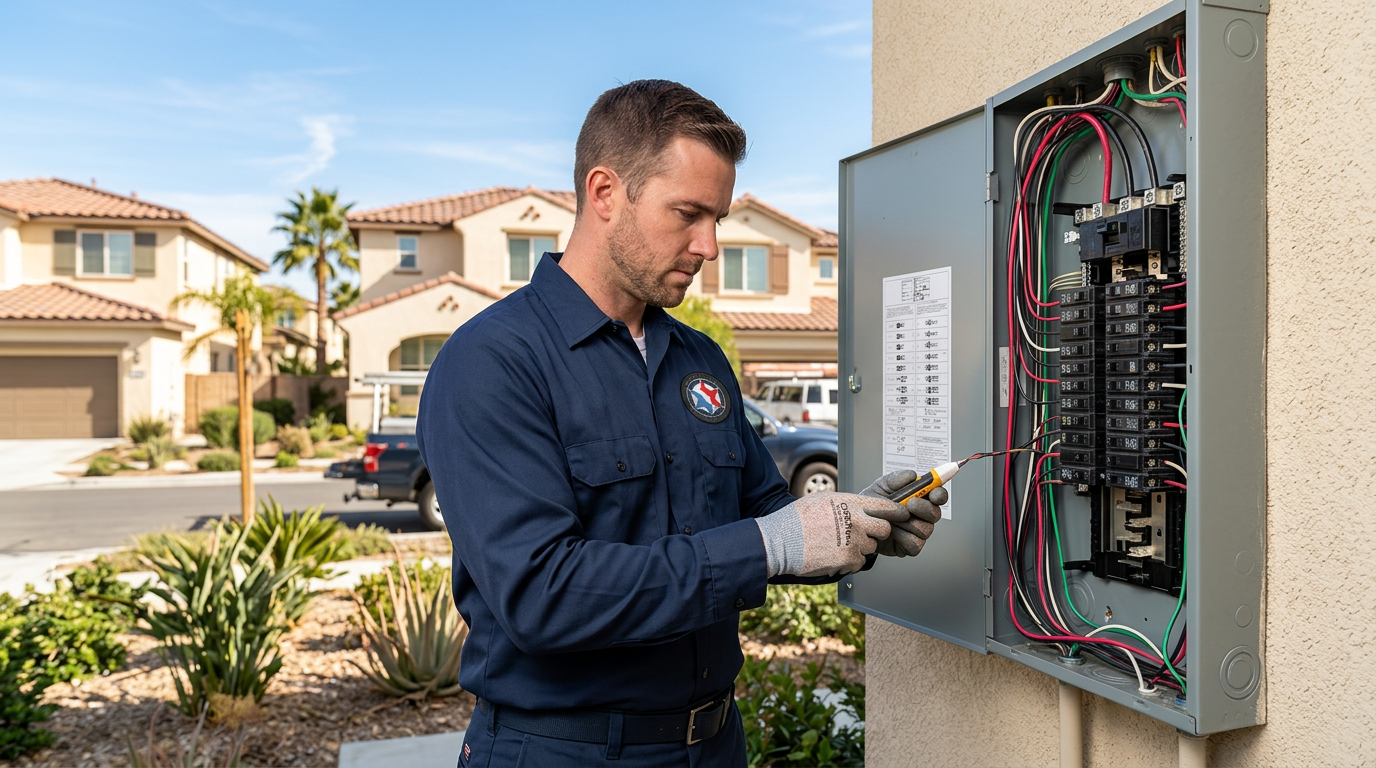
An excellent installer also checks grounding and bonding, service detach labeling, and the condition of the main lugs. I have actually opened plenty of panels where a previous DIYer doubled up neutrals on a single terminal or left a bonding screw in a subpanel. Those fixes fast however important before we include a brand-new 240 volt circuit.
Panel Capacity, Upgrades, and When to Avoid Overbuilding
There is a temptation to go straight to a 200 amp panel replacement in Orange County the minute an EV enters the chat. In some cases that is right, specifically in homes with electric cooking, electric clothes dryers, a heat pump, and a future swimming pool or spa. Often, however, a mindful load calc and smart circuit sizing prevent that cost.
A few genuine examples from current work:
- A 1978 Huntington Beach home with a 125 amp main, gas devices, and a 50 amp variety. We installed a 40 amp EV circuit, set the EVSE to 32 amps, and kept the range breaker at 40. The calculation remained under service limitations with margin. No panel upgrade needed. A 1960s Costa Mesa home with a 100 amp service, electrical dryer, and a removed garage. Between the trench to the garage, a subpanel, and the EV circuit, we advised a 200 amp service upgrade at the meter-main. The house owner desired a hot tub next year, so the choice saved a 2nd authorization and second trench later. A new integrate in Irvine with a 200 amp service currently CALGreen EV Ready. We utilized the prewired 40 amp circuit and switched the receptacle for a hardwired Wall Adapter since the family planned to include a 2nd Tesla. Two Wall Connectors sharing a 60 amp feeder on load sharing algorithms handled both cars and trucks without issue.
Upgrades take coordination with the utility and, in some cities, an inspector wants a load sheet attached to the license. Updating underground services can extend timelines due to energy scheduling, and costs increase when your home sits far from the transformer. That is where a regional electrical expert Orange County property owners trust makes their keep, by understanding the number of weeks the existing queue runs and designing around it where possible.
Permits, Inspection, and What Cities Expect
Most Orange County jurisdictions require a license for EVSE installation. Lots of have online over-the-counter choices for domestic Level 2 when the scope is simple. Expect submittals that include a site strategy showing the charger area, a single line diagram, panel schedule or load computation, and the EVSE spec sheet.
Anaheim, Irvine, Santa Ana, Huntington Beach, Fullerton, and other cities in the county support online portals that speed things up, and inspectors here see EV chargers daily. For an uncomplicated installation, permits typically turn around in a few days to a week. More complex work, such as a panel replacement or new service, can take longer due to prepare check or energy coordination. Ask your installer to manage permitting, and to be on site for assessment day. An Orange County electrical contractor who fulfills inspectors routinely understands what each one tries to find, such as identifying conventions and conductor fill in short channel runs.
In multifamily or HOA settings, the permit is only half the formula. You might require HOA architectural approval, a documented arrangement on metering or compensation, and sometimes a load study of the neighborhood panel or house meter. Prepare for an extra few weeks if your charger will being in a shared garage or a deeded stall.
Tesla Wall Port, NEMA 14-50, and Other Choices
Tesla owners today have three typical routes in your home: a hardwired Wall Adapter, a NEMA 14-50 receptacle utilized with a Mobile Port, or a 3rd party J1772 charger used with an adapter. The choice comes down to present, convenience, and code.
A Wall Port hardwired to a devoted circuit avoids a GFCI receptacle requirement that applies to 240 volt outlets in garages, and the Wall Adapter includes integral ground fault protection. It also supports higher currents than most portable services and, in multi-EV homes, permits load sharing throughout 2 or 3 systems on a single feeder. In useful terms, two cars can charge over night without going beyond the feeder's ranking. For example, a 60 amp feeder can divide to 2 systems that coordinate charging so neither exceeds limits.
A NEMA 14-50 receptacle is easy and flexible if you alter brand names later on, however code today requires a GFCI breaker or receptacle for 240 volt outlet circuits in garages. That can produce annoyance journeys with some EVs or portable EVSE units. If you go this path, pick quality devices and a tight terminations standard. We torque terminals to producer specs and use commercial grade receptacles, not the most affordable design on the shelf.
Third party Level 2 units differ in functions like Wi Fi, load management, energy tracking, and cable management. Systems from reliable producers hold up well in our seaside climate if set up with weather condition considerations. In outside locations, I choose a NEMA 4 enclosure score and UV resistant channel and fittings.
What the Code Appreciates, And Why It Matters
EV charging in California sits under the embraced electrical code with state and local modifications. A couple of points we deal with on almost every job:
- GFCI security is required for 125 to 250 volt receptacles in garages and outdoors. Hardwired EVSE includes important security. Choosing hardwired frequently heads off problem trips. Working clearances around panels must be preserved. That suggests no new racks or compressor storage in front of a panel after we add a circuit. We flag this so evaluation goes smoothly. Conductor sizing and terminations should match the circuit's rating and the EVSE's setting. We set the EVSE to match the breaker and label it. Inspectors search for that harmony. Grounding and bonding must be right at the service and any subpanels. Old homes frequently require an upgrade to bonding of gas and water lines, and replacement of the grounding electrode conductor to contemporary sizing.
California's building code likewise has EV All set requirements in new building that many Orange County builders meet a 40 amp circuit stubbed in. We test those circuits because a mislabeled or underwired stub appears more frequently than you might expect.
Running the Route: Surface Channel, In Wall, and Detached Garages
Most homes can reach a garage charging location with a short run of EMT channel on the surface, cleanly bent and strapped along the garage wall. It is cost effective and simple to service later on. In finished garages or living areas, we can fish cable television through walls or attic areas to hide the path. That adds labor and sometimes minor drywall work, but keeps the garage looking untouched.
Detached garages present range. Here, we take a look at trenching, channel type, and whether a subpanel makes sense. If the garage already has a light and a couple of outlets fed by a small branch circuit, adding a Level 2 battery charger is not simply an easy add. The charger requires its own effectively sized feeder. Running a subpanel to the garage opens options for future requirements like lighting setup, outdoor lighting around the side backyard, or a store circuit. In older alleys in cities like Orange and Santa Ana, we coordinate trenching under driveways or try to find a route along a fence line to keep concrete cutting down.
Every so typically we see someone attempt a long extension cable to an automobile in a driveway. That is a tripping hazard and a code offense in almost every permutation. If curbside charging is your reality, we discuss a pedestal mount near the driveway apron, with correct bollard defense where needed.
Costs You Can Expect, And Why Estimates Vary
Homeowners ask for a number in advance. A transparent variety helps set expectations, especially in a county with homes that vary from homes to estate lots.
For a normal installation within 10 to 20 feet of a primary panel, with clear mounting, a surface conduit run, and a hardwired Level 2 system, many jobs land in the 800 to 1,800 dollar variety before the expense of the EVSE itself. Including range, attic work, drywall patching, GFCI breaker requirements, or a subpanel can move that into the 1,800 to 3,500 dollar zone. A panel replacement or new 200 amp meter-main in Orange County often ranges from 2,500 to 5,500 dollars depending on service type, brand, and energy coordination, with underground service upgrades possibly higher.
Condo and HOA work tends to cost more due to engineering letters, HOA approvals, longer avenue runs, and metering options. Those tasks often range from 2,500 to 7,500 dollars all in, sometimes more if the building requires a core drill and heavy duty surface area raceways.
Utility rebates and state incentives change gradually. Local utilities serving Orange County have actually used numerous EV related rebates, and some EVSE manufacturers supply discounts through energy programs. These programs open and close, and the quantities differ. Validate existing deals on official utility or state program pages rather than counting on outdated blog site posts.
A Brief House owner List That Speeds Everything Up
- Snap a clear photo of your primary electrical panel with the door open so circuit labels show up, and another with the cover off if you are comfortable. This assists us assess area and service. Measure the distance from the panel to your preferred charger area along the most likely course, not as the crow flies. Tell your installer about huge future loads you are considering, like a day spa, solar with a battery, or a second EV. We can design once rather of removing work later. If you live in an apartment or HOA, get the contact for your HOA manager and your parking space designation ready. Expect a kind or letter request. Decide where the cable television will hang when not in use. An easy holster or wall hook avoids flooring threats and keeps the cord alive longer.
Timeframes: From Call to Plug In
Once we have images and a website walk, a lot of uncomplicated EV charger setups arrange inside one to two weeks, and the on site work wraps in half a day. Allows in lots of Orange County cities problem quickly, however we can not control every line. If a panel replacement or service upgrade is needed, expect a longer timeline due to plan check and energy coordination. Condo work adds HOA timing, which can be quickly with a responsive board or slow during holidays. A good residential electrician Orange County homeowners suggest will keep you published with sincere dates and hold off on scheduling till licenses remain in hand.
Emergency needs occur. If your EV is your only car and your portable battery charger passed away, a same day electrical expert Orange County based may supply a short-term Level 1 solution while the appropriate Level 2 installation moves through permitting. A 24 hour electrical contractor Orange County homeowners can call works for real dangers, like a breaker that warms or scorched insulation in a panel. For planned work, schedule during regular hours to save on premium rates and to keep inspectors aligned.
Safety, Reliability, and Coping With Your Charger
Once set up, there is little to do. A lot of contemporary EVSE units self test on power up and log faults. The best thing you can do is use the devices as created, keep the adapter off the floor, and avoid tough kinks in the cable television. Every 6 months, take a look at the terminations and fittings for signs of wetness or deterioration if the system sits outdoors near the coast. If you hear relentless buzzing at the panel or see nuisance tripping, call for electrical fixing Orange County homeowners can trust. We would rather capture a loose lug early than replace a scorched breaker later.
GFCI protection in garages occasionally causes mystery journeys. Some vehicles' onboard chargers and some EVSE designs interact in manner ins which press a borderline gadget over the edge. Switching to a recognized dependable breaker or upgrading a receptacle to commercial grade often fixes it. In uncommon cases, moving from a receptacle setup to a hardwired unit is the cleanest fix.
Multifamily, Work environment, and Industrial Considerations
In apartment or condos and condos, metering is frequently the sticking point. Who spends for the electrical power, and how is that tracked fairly? There are three common solutions: a circuit from the homeowner's panel with a submeter, a connection to house power with a networked EVSE that bills back to the local, or a brand-new meter from the utility dedicated to EV charging. All 3 have benefits and drawbacks around in advance cost and ongoing fees.
For business spaces, such as offices in Irvine Spectrum or retail in Costa Mesa, the discussion shifts to gain access to control, uptime, and ADA requirements for parking and cable television reach. A https://judahhfjf279.zenbloomer.com/posts/medical-workplace-electrical-compliance-orange-county commercial electrician Orange County home supervisors utilize consistently will spec bollards where required, choose outside rated equipment, and incorporate chargers with structure management systems. Networked battery chargers enable usage reports and can support staff member incentives.
Future Proofing Without Buying More Than You Need
EV adoption keeps climbing up, and many families include a 2nd plug in automobile within a couple of years. Plan for it. If we run a 60 amp feeder today and set up one Wall Adapter, we can add a 2nd later that shares load. If your service will not support more load, we can still create a system that sheds EV charging when the variety or oven runs, utilizing a smart home wiring technique with a load management relay.
If solar is on your horizon, think of charger placement relative to where an inverter and possible battery might live. Collaborating avenue runs can save channel crowding later on. Some chargers integrate solar tracking or time of use scheduling to align with off peak rates. We set those up during commissioning if the property owner wants it.
For older homes thinking of whole home rewiring Orange County projects, bundle the EV work into that scope. Pulling new homeruns, adding AFCI defense, and replacing brittle conductors pays dividends on security and dependability beyond the charger alone.
Common Risks We See, And How To Prevent Them
One of the most regular bad moves is utilizing a 50 dollar receptacle on a 50 amp EV circuit and expecting it to last 5 years of everyday usage. Heat cycles loosen up connections and low-cost gadgets quit early. Invest in quality devices, torque them correctly, and you will forget the receptacle exists.
Another is disregarding cable management. A charger mounted in the wrong area results in a cable television stretched throughout strolling paths and kids' bikes. We always mock up where the parking area, where the port is, and where the cable television drapes. Moving a bracket 2 feet typically resolves a day-to-day annoyance.
Finally, avoiding licenses to conserve a few hundred dollars can backfire during home sale, insurance coverage claims, or when a future electrical expert has to guess what was done in the wall. Many cities make EV permits easy for a reason. Use them.
Why a Regional, Certified Team Matters
There are many options when you look for electrician near me Orange County. Look for a licensed electrician Orange County house owners can validate with the state license board, insurance coverage in location, and recommendations. The best electrical contractor Orange County residents suggest will not oversell you on amperage, will give you options with trade offs, and will stand behind their work after assessment. A top rated electrical contractor Orange County households call back often started as a residential electrician Orange County based, then turned into an Orange County electrical contractor efficient in panel replacement Orange County tasks, generator installation Orange County homes throughout fire season, and reputable Orange County electrical repair calls when storms hit.
Price matters, however so does workmanship. A cost effective electrical expert Orange County way need to still identify circuits neatly, strap avenue at the best spacing, and leave your garage cleaner than they found it. A regional electrical expert Orange County team has actually seen your system, understands the energy transformer on your cul de sac, and keeps in mind that the city you reside in likes grounding labels on the inside of the panel cover, not the outside.
Maintenance, Troubleshooting, and When To Call
A Level 2 charger is low maintenance. If you ever see discoloration on a breaker or odor a hot electrical odor, cut power and call. If the EVSE shows a persistent fault, photo the mistake lights and send out the model and firmware if available. Lots of problems resolve with a firmware upgrade or a breaker replacement after years of service. For deeper concerns, a skilled emergency electrician Orange County based can stabilize things, then arrange an appropriate repair work throughout routine hours.
EV gear plays well with other upgrades too. If we carry out a lighting setup Orange County property owners want in a garage, we can connect motion sensors to light the walk from the motorist's door to the interior door. If we add recessed lighting Orange County design in an ended up garage or low voltage wiring Orange County citizens utilize for cams, we prepare around the EV cable so nothing looks like an afterthought.
A Few Short Responses To Questions That Come Up
Do I require a 60 amp circuit to get quick charging in your home? Not constantly. Numerous cars and trucks onboard chargers peak at 32 to 40 amps. If your car only takes 32 amps, a 40 amp circuit suffices and often more suitable with your panel capacity.
Can I use my clothes dryer outlet? Typically not securely or conveniently. Clothes dryer circuits are not created for regular plug and disconnect cycles, and sharing a circuit can break code and develop problem trips. A devoted circuit for an electric car battery charger Orange County inspectors see day-to-day is the proper route.
Will a battery charger raise my electrical bill a lot? Charging uses energy, of course, however time of usage rates in Southern California benefit over night charging. Many property owners see expense per mile considerably lower than fuel, specifically when charging throughout incredibly off peak windows. Specific numbers depend upon your energy plan and miles driven.
Can I charge outdoors? Yes, with the right equipment. Pick NEMA 3R or 4 rated enclosures, UV ranked avenue, and an installing area that avoids direct sprinkler spray. We seal penetrations vigilantly and utilize stainless hardware near the coast.
How long does examination take? The physical evaluation fasts, often 10 to 20 minutes. Scheduling depends on the city's calendar. Your installer should satisfy the inspector, demonstrate settings and labeling, and remedy any small notes promptly.
Ready When You Are
EV battery charger installation Orange County projects are successful when designed around your real home and practices. The ideal existing, in the ideal location, with code minded details, makes daily charging invisible. Whether you drive a Tesla, a Chevy, a Ford, or a Rivian, a thoughtful installation beats an optimum specification installation whenever. If you are weighing a panel upgrade, planning clever home wiring, or merely want a clean, reputable charger where you park, start with a conversation and a site walk. The rest follows naturally.